
Call us now
07971550079
Call us now
07971550079

A Class 300 ball valve is a quarter-turn isolation valve designed to handle higher pressure applications than Class 150 valves. It is manufactured in accordance with pressuretemperature ratings specified by the American Society of Mechanical Engineers (ASME), typically under ASME B16.34.
Class 300 refers to the flange pressure rating of the valve.
For carbon steel materials (e.g., ASTM A216 WCB):
Maximum pressure at 100F (38C): approx. 740 PSI (51 bar)
Pressure rating decreases as temperature increases
Flange dimensions generally follow ASME B16.5
This pressure class is suitable for medium to high-pressure systems.
A Class 300 ball valve works using a rotating ball with a central bore:
Open Position Bore aligned with pipeline for full flow
Closed Position Ball rotated 90 to stop flow completely
The quarter-turn design ensures fast operation and tight shut-off.
Body Cast or forged carbon steel, stainless steel, or alloy steel
Ball Precision-machined stainless steel or alloy steel
Stem Blow-out proof design
Seats PTFE, RPTFE, PEEK, or metal seated (for high temperature)
End Connections Flanged (most common), butt-weld, or socket weld
Operator Lever (small sizes), gear operated (large sizes), or actuator


Price:
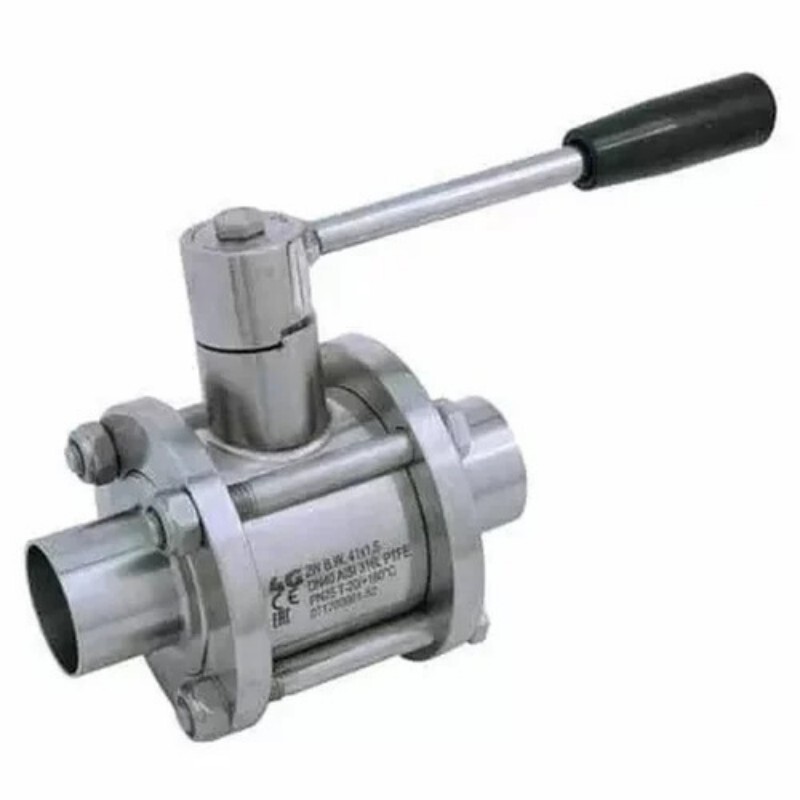
Price 3750.0 INR / Piece
Minimum Order Quantity : 10 Pieces
Media : Water
Port Size : 2 inch (50mm)
Usage : Industrial
Material : Stainless Steel

Price 1510.0 INR / Piece
Minimum Order Quantity : 10 Pieces
Media : Water
Port Size : Customized
Usage : Industrial
Material : Other

Price 1510.0 INR / Piece
Minimum Order Quantity : 10 Pieces
Media : Water
Port Size : Customized
Usage : Industrial
Material : Alloy

Price 1958.0 INR / Unit
Minimum Order Quantity : 10 Pieces
Media : Water
Port Size : 2"
Usage : Industrial
Material : Stainless Steel


 Send Inquiry


 Send Inquiry
 Send Inquiry
 Send SMS
 Call Me Free
